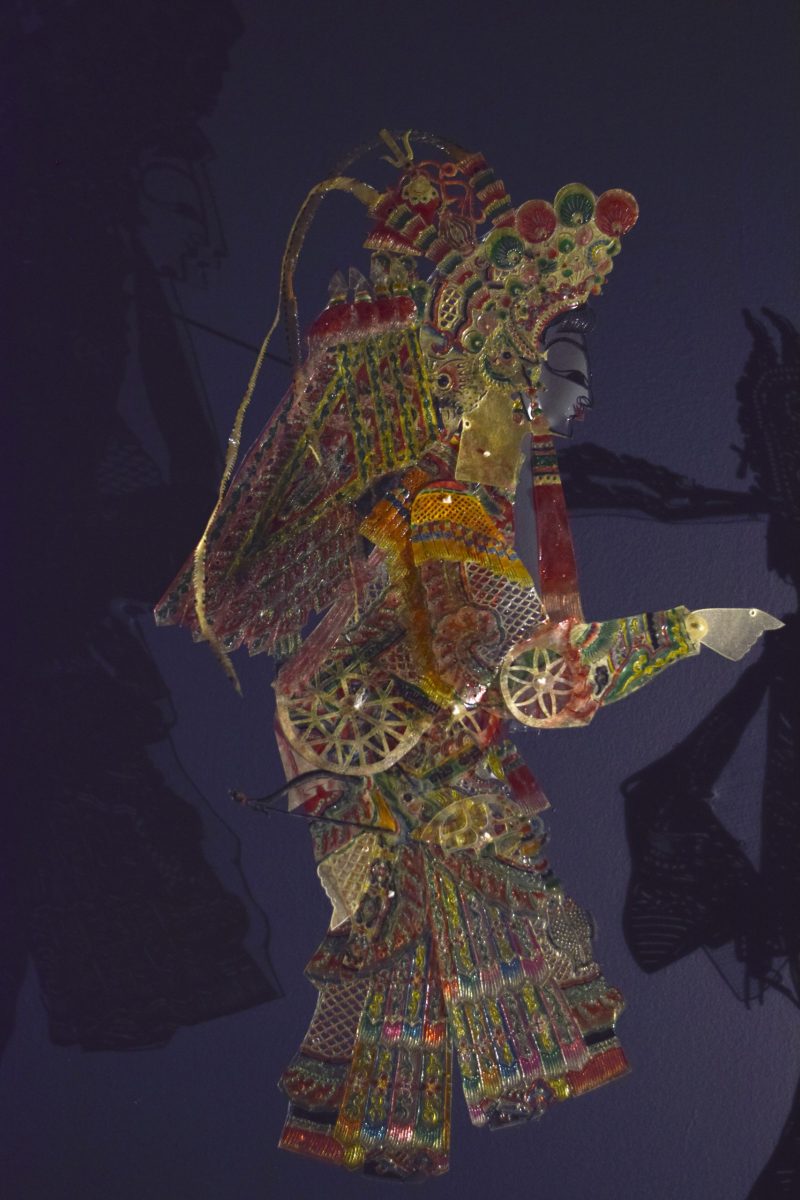
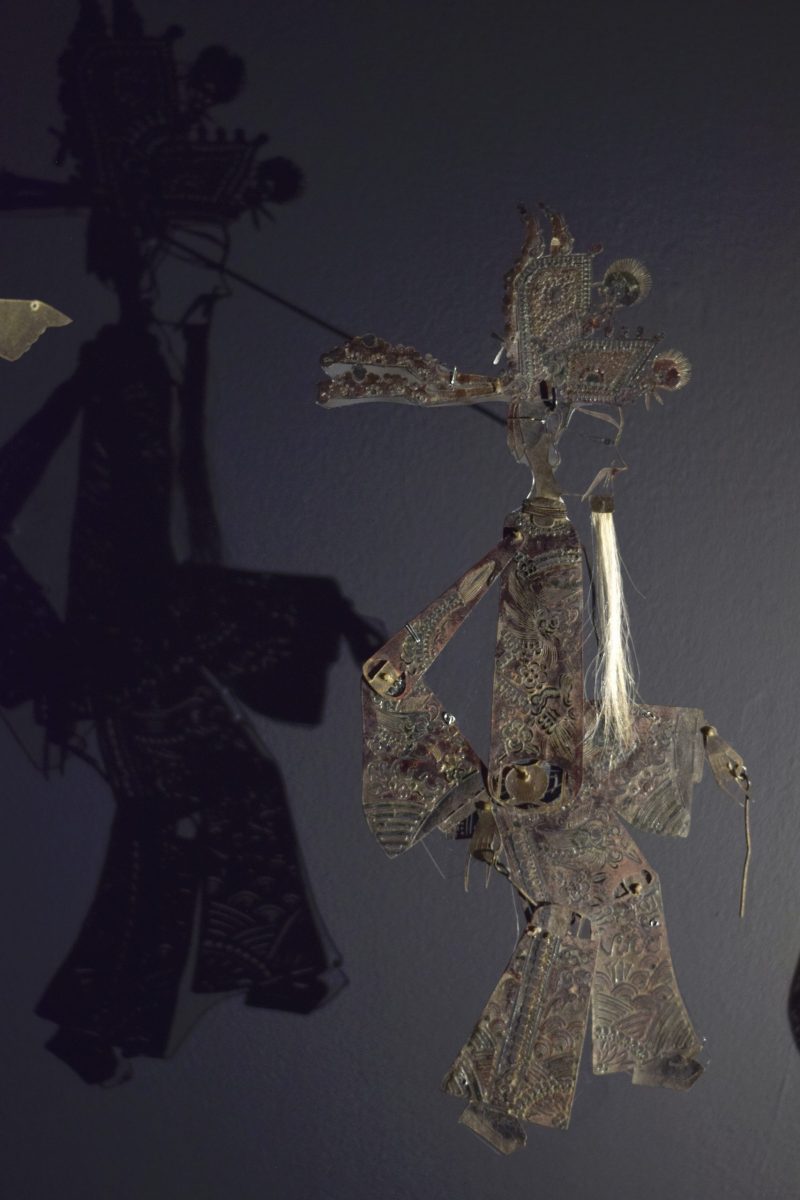
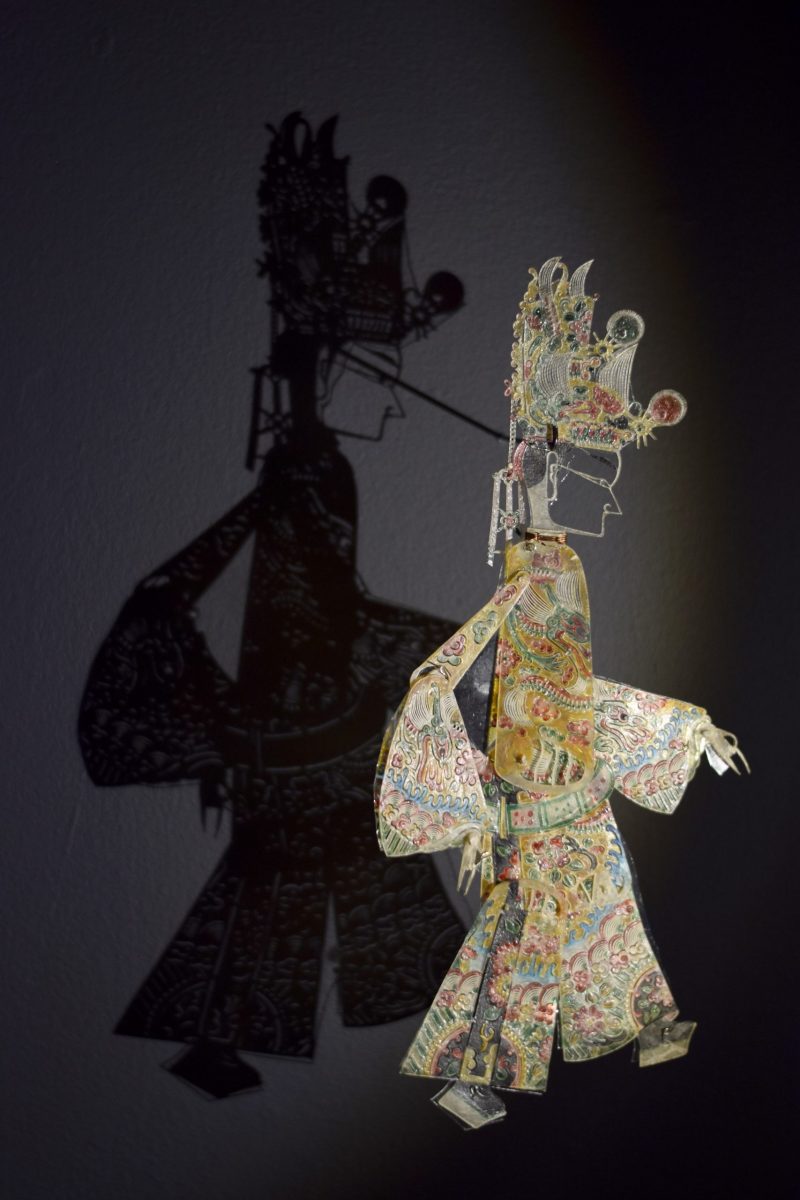
The old and the new—what accumulated life do the puppets carry with them into their new life as artifacts?
Left: Mu Guiying, Woman Warrior, by Hebei province master Lu Fuzeng. Middle: unknown artist, dated early 1900s, from the province of Gansu (Northwestern China). Right: Tang dynasty emperor, dated early 2000s, by Shaanxi province master Wangyan, one of the few women to be working at the master level in China.


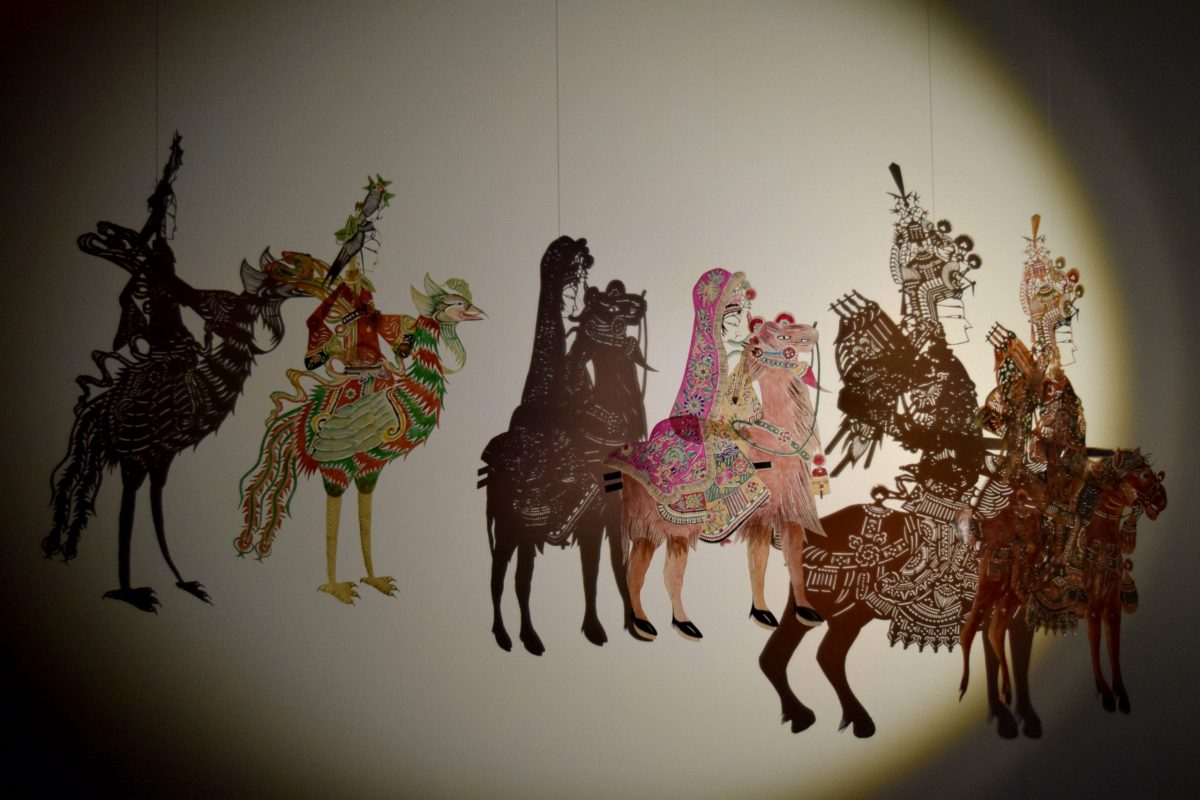
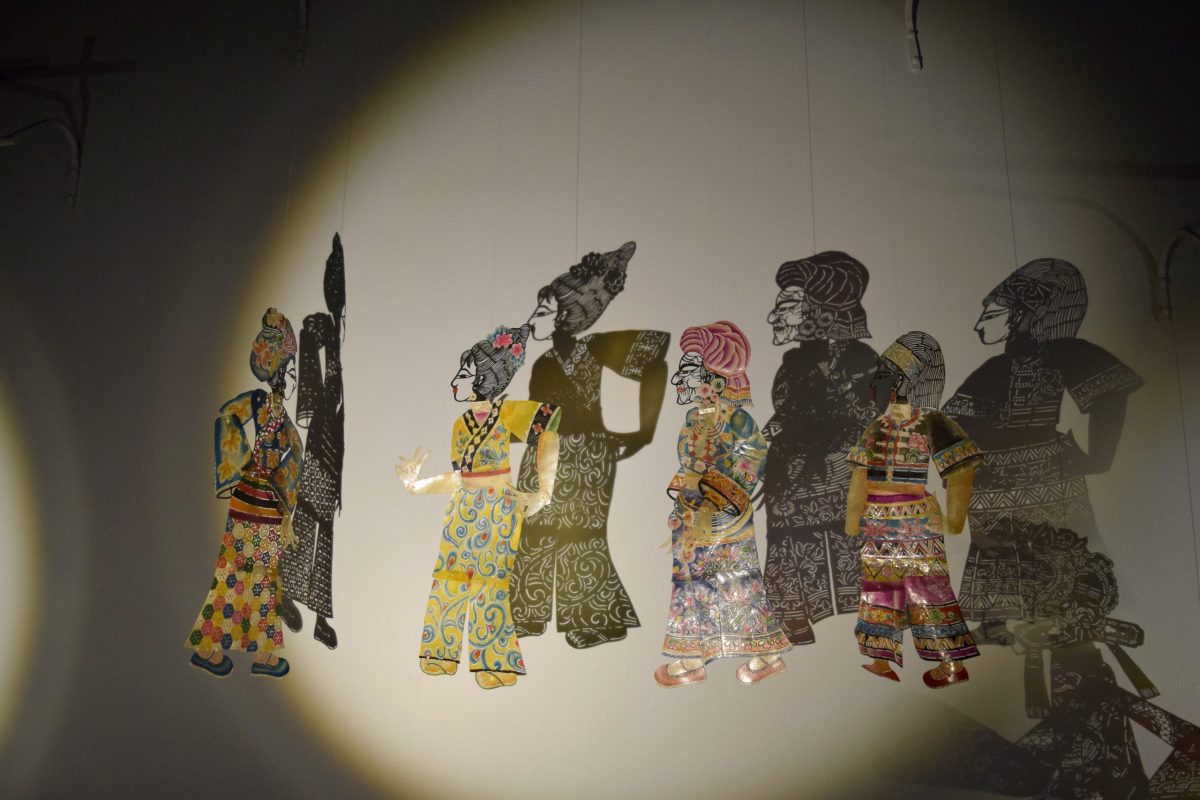
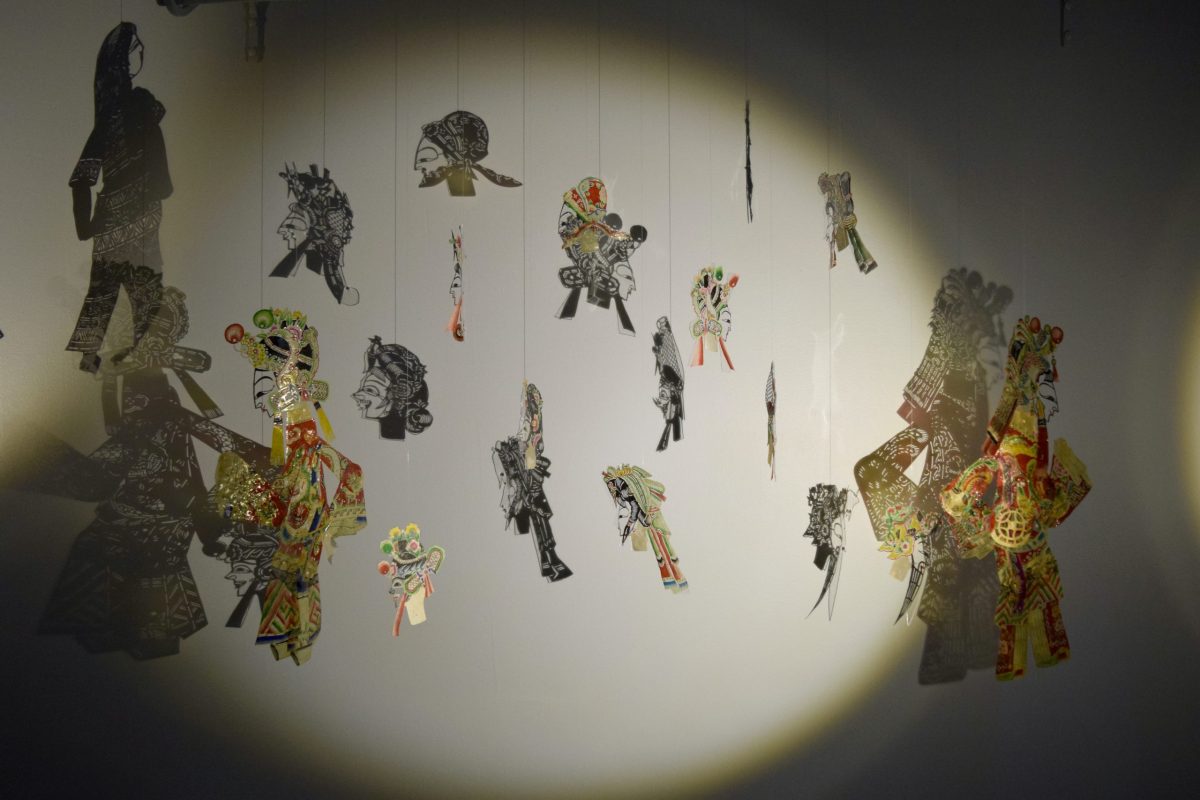
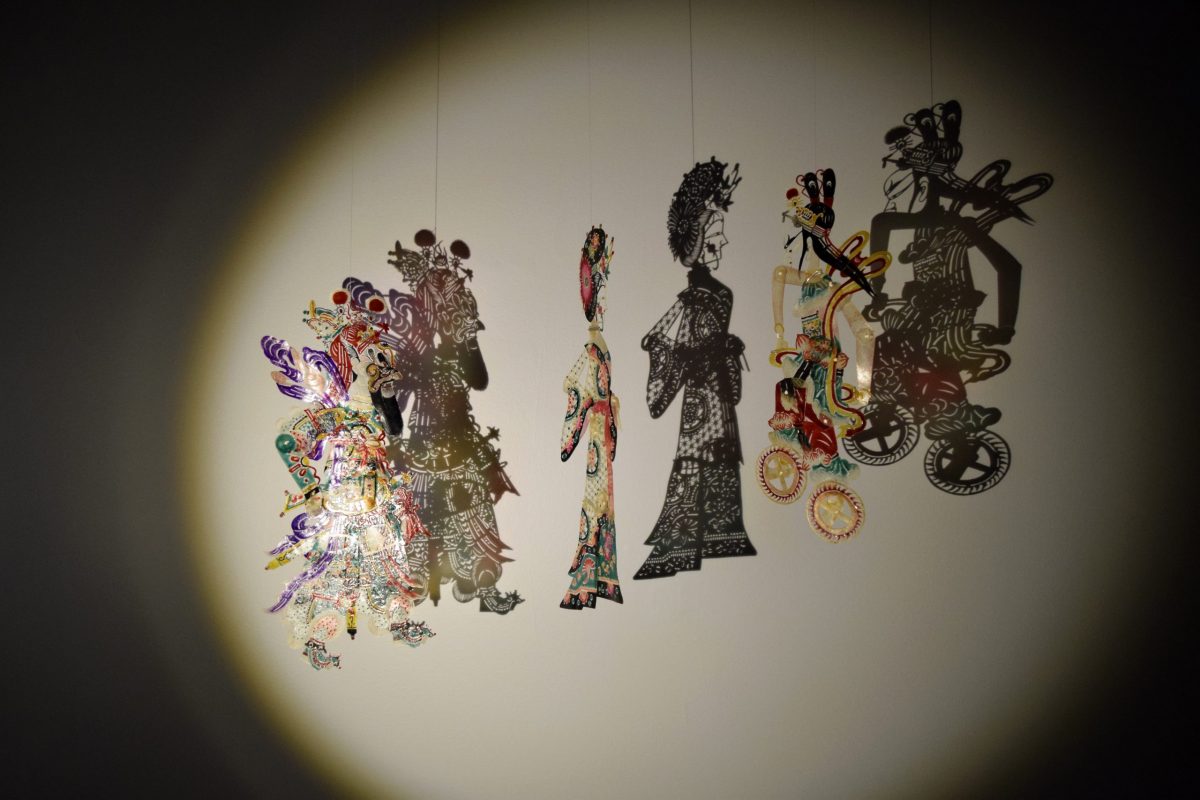
Are the hanging figures more lifelike or more lifeless than their shadows?
Left to Right:
Set 1: Mounted figures by Gao Qingwang, Gansu Province
Set 2: Assorted women shadow puppets by Liu Yongzhou, Yunnan Province
Set 3: Assorted puppets and puppet heads by the Lu Family makers, Hebei Province
Set 4: Assorted puppets by Wei Jinquan, Shaanxi Province


The creation of a puppet is part of its history. These tools are often displayed as the objects that created them, but where are the hands that guided them?
Beeswax boards and small hand blades are typical of cutting tools from northeastern China. Wood cutting boards with small hand blades and metal punches are typical of cutting tools from northern Central China.