Web cookies (also called HTTP cookies, browser cookies, or simply cookies) are small pieces of data that websites store on your device (computer, phone, etc.) through your web browser. They are used to remember information about you and your interactions with the site.
Purpose of Cookies:
Session Management:
Keeping you logged in
Remembering items in a shopping cart
Saving language or theme preferences
Personalization:
Tailoring content or ads based on your previous activity
Tracking & Analytics:
Monitoring browsing behavior for analytics or marketing purposes
Types of Cookies:
Session Cookies:
Temporary; deleted when you close your browser
Used for things like keeping you logged in during a single session
Persistent Cookies:
Stored on your device until they expire or are manually deleted
Used for remembering login credentials, settings, etc.
First-Party Cookies:
Set by the website you're visiting directly
Third-Party Cookies:
Set by other domains (usually advertisers) embedded in the website
Commonly used for tracking across multiple sites
Authentication cookies are a special type of web cookie used to identify and verify a user after they log in to a website or web application.
What They Do:
Once you log in to a site, the server creates an authentication cookie and sends it to your browser. This cookie:
Proves to the website that you're logged in
Prevents you from having to log in again on every page you visit
Can persist across sessions if you select "Remember me"
What's Inside an Authentication Cookie?
Typically, it contains:
A unique session ID (not your actual password)
Optional metadata (e.g., expiration time, security flags)
Analytics cookies are cookies used to collect data about how visitors interact with a website. Their primary purpose is to help website owners understand and improve user experience by analyzing things like:
How users navigate the site
Which pages are most/least visited
How long users stay on each page
What device, browser, or location the user is from
What They Track:
Some examples of data analytics cookies may collect:
Page views and time spent on pages
Click paths (how users move from page to page)
Bounce rate (users who leave without interacting)
User demographics (location, language, device)
Referring websites (how users arrived at the site)
Here’s how you can disable cookies in common browsers:
1. Google Chrome
Open Chrome and click the three vertical dots in the top-right corner.
Go to Settings > Privacy and security > Cookies and other site data.
Choose your preferred option:
Block all cookies (not recommended, can break most websites).
Block third-party cookies (can block ads and tracking cookies).
2. Mozilla Firefox
Open Firefox and click the three horizontal lines in the top-right corner.
Go to Settings > Privacy & Security.
Under the Enhanced Tracking Protection section, choose Strict to block most cookies or Custom to manually choose which cookies to block.
3. Safari
Open Safari and click Safari in the top-left corner of the screen.
Go to Preferences > Privacy.
Check Block all cookies to stop all cookies, or select options to block third-party cookies.
4. Microsoft Edge
Open Edge and click the three horizontal dots in the top-right corner.
Go to Settings > Privacy, search, and services > Cookies and site permissions.
Select your cookie settings from there, including blocking all cookies or blocking third-party cookies.
5. On Mobile (iOS/Android)
For Safari on iOS: Go to Settings > Safari > Privacy & Security > Block All Cookies.
For Chrome on Android: Open the app, tap the three dots, go to Settings > Privacy and security > Cookies.
Be Aware:
Disabling cookies can make your online experience more difficult. Some websites may not load properly, or you may be logged out frequently. Also, certain features may not work as expected.
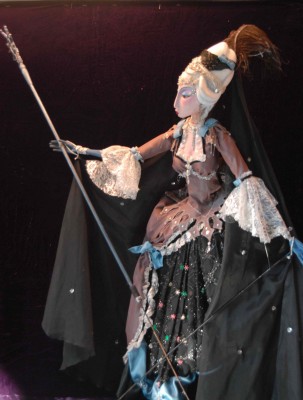
An amazing array of puppets from the Ballard Institute collections and UConn’s Puppet Arts Program will be on display September 9 through October 5 in “The World of Puppetry”, an exhibition at the Vernon Community Art Center in Vernon, Connecticut! The Opening Reception for the event is Sunday, September 8 from 1 to 4 p.m.
The exhibition includes the following amazing workshops, performances, and talks:
– Three puppet shows created and performed by graduate students of the Puppet Arts Program on Saturday, September 14th at 2:00; Sunday, September 22nd at 2:00; and Saturday, October 5th at 7:30.
– Shadow Theatre Workshop on Saturday, September 21st
– Toy Theatre Workshop on Saturday, September 28th. These intergenerational workshops, led by UConn Puppetry faculty and students, are intended for children, parents and/or grandparents.
Rod puppets by Frank Ballard
– “Behind the Puppet Stage”: a lecture by Puppet Arts Program Director Bart Roccoberton on Sunday, September 29th.
Gallery hours for the exhibition, from September 12th through October 5th, are Thursday through Sunday 1 – 5.
For details about the performances and to register for the workshops, please visit the Vernon Community Arts Center website or contact the VCAC by phone at: (860) 871-VCAC (8222).
This project is made possible by a grant from The Greater Hartford Arts Council and funding from The Vernon Arts Commission.
Puppets from around the world representing several centuries worth of global traditions, as well as as cutting-edge hybrids of puppetry and digital technology, make up the rich array of performing objects on display in the Ballard Institute’s new exhibition Strings, Rods, Robots: Recent Acquisitions.
Jim Henson’s “Wizard of Id”
The exhibition, curated by UConn Art and Art History graduate student Lindsay Simon, showcases an exhilarating diversity of puppets from around the world recently donated to the Ballard Institute and Museum of Puppetry. Strings, Rods, Robots exhibition brings together ancient puppet traditions and Modernist innovations, with objects ranging from Vietnamese water puppets, Persian ritual marionettes, and Javanese shadow puppets to 1930s Alabama marionettes, department store automata by Ellen Rixford, a lifesize robotic marionette by French media artist Zaven Paré, traditional Egyptian shadow puppets, a Dada-inspired marionette by Australian artist Sally Smart, a spectacular Danish toy theater, and a stunning array of global puppet forms collected by John E. and Marilyn O’Connor Miller.
Electronic Marionette by Zaven Paré
These visually striking–and sometimes startling–juxtapositions reveal the contemporary world of puppetry as a fecund and florid network of hybrid culture, where centuries-old traditions of epic, religious, comic, and political puppetry performed with wooden, cloth, and leather figures rub shoulders with mechanical or electronic puppets made of plastic, metal, and glass. And yet, despite these fascinating contradictions, the old and new puppets continue to reveal to us what is happening in our societies, with insight, humor, and wisdom.
An eye-opening exhibition of a ground-breaking 20th-century American puppeteer, Dick Myers, is now on display at the Ballard Museum. ”Exceptional and Uncommon: The Puppetry of Dick Myers” is a fascinating in-depth look at a puppeteer’s puppeteer—an innovative and ingenious designer, builder, and performer whose work, while highly respected in the international world of puppetry, never brought him fame.
Curated by Puppet Arts Program graduate student Seth Shaffer, “Exceptional and Uncommon” brings together scores of rod puppets, marionettes, and hand puppets designed and performed by Myers; innovative sound, lighting, and stage equipment he designed; photographs of Myers at work and in performance; and a documentary video filmed and edited by Shaffer in which Myers’s friends and colleagues describe his work and his life.
Dick Myers was one of the leading American puppeteers of the later 20th century. Although his work is now relatively unknown, in its time his puppet shows were highly respected by puppeteers around the world for the compelling and original design of the puppets, Myers’ skillful manipulation, and the challenging tasks he set out and achieved with his creations.
In the early years of his career Dick Myers worked with many well-known puppeteers including Connecticut’s Rufus and Margo Rose, and Martin and Olga Stevens of Indiana. He was, however, best known for his unique solo rod puppet shows: Dick Whittington’s Cat (1966), Cinderella(1967), Beauty and the Beast (1969), Simple Simon (1976), and Divertissement (1978).
“Exceptional and Uncommon: The Puppetry of Dick Myers” is a revelatory and thought-provoking window into puppetry of the late 20th century, when American puppeteers combined technological innovations with home-grown humor and popular culture in order to re-define puppetry as an aspect of contemporary American culture.
This Summer, The Ballard Institute and Museum of Puppetry will once again be presenting puppet shows for all ages performed by students from the famed UConn Puppet Arts Program.
Every Saturday from June 29th to July 27th at 3 pm, join us for these exciting and unique presentations.
Performances will take place at The Puppet Arts Complex (as the Thompson Building on this map) down the street from The Ballard Institute and Museum of Puppetry on UConn’s Depot Campus off US-44.
June 29th, 3 pm: Puppet Arts Family Friendly Potpourri! Vignettes from current Puppet Arts students including “The Fluff Catillion,” a meow-velous toy theater by Dana Samorski and Carianne Hoff, and “The Most Beautiful Tree” a toy theater production by Anna Fitzgerald.
July 6th, 3pm: Seth Shaffer performs Dick Myers’ Cinderella with Myers’ unique rod puppets. Come early or stay late and check out the Dick Myers exhibition at The Ballard Museum.
July 13th, 3pm: Xing Xin’s Shadow Show. Xing Xin Liu’s original pieces of shadow theater, inspired by her studies with Chinese Shadow Puppet masters.
July 20th, 3pm: Seth Shaffer performs Dick Myers’ Beauty and the Beast with Myers’ unique rod puppets. Come early or stay late and check out the Dick Myers exhibition at The Ballard Museum.
July 27th, 3pm: Sarah Nolen’s Tales from the Woods including her shadow puppet performance of “Lisa the Wise.”
Performances are $5 for Adults and $3 for children. Come early or stay late to see the current exhibitions at The Ballard Museum.
This Summer, The Ballard Institute and Museum of Puppetry will once again be presenting puppet shows for all ages performed by students from the famed UConn Puppet Arts Program.
Every Saturday from June 29th to July 27th at 3 pm, join us for these exciting and unique presentations.
Performances will take place at The Puppet Arts Complex (as the Thompson Building on this map) down the street from The Ballard Institute and Museum of Puppetry on UConn’s Depot Campus off US-44.
Seth Shaffer will perform Dick Myers’ Cinderella
June 29th, 3 pm: Puppet Arts Family Friendly Potpourri! Vignettes from current Puppet Arts students including “The Fluff Catillion,” a meow-velous toy theater by Dana Samorski and Carianne Hoff, and “The Most Beautiful Tree” a toy theater production by Anna Fitzgerald.
July 6th, 3pm: Seth Shaffer performs Dick Myers’ Cinderella with Myers’ unique rod puppets. Come early or stay late and check out the Dick Myers exhibition at The Ballard Museum.
July 13th, 3pm: Xing Xin’s Shadow Show. Xing Xin Liu’s original pieces of shadow theater, inspired by her studies with Chinese Shadow Puppet masters.
July 20th, 3pm: Seth Shaffer performs Dick Myers’ Beauty and the Beast with Myers’ unique rod puppets. Come early or stay late and check out the Dick Myers exhibition at The Ballard Museum.
July 27th, 3pm: Sarah Nolen’s Tales from the Woods including her shadow puppet performance of “Lisa the Wise.”
Performances are $5 for Adults and $3 for children. Come early or stay late to see the current exhibitions at The Ballard Museum.
The new Ballard Institute at Downtown Storrs will be located in this complex.
The Ballard Institute and Museum of Puppetry, part of the University of Connecticut’s world-renowned puppet programs in the School of Fine Arts, will become part of Downtown Storrs in the fall.
The museum will relocate from its current location at UConn’s Depot campus to a more accessible exhibition and performance space that is part of the new branch of the UConn Co-op in Downtown Storrs.
“Our move to Downtown Storrs is a great opportunity for the Ballard Institute to thrive in the middle of a busy community environment,” says John Bell, Director of the museum and a theater historian. “We are looking forward to expanding our hours of operation, presenting more puppet performances, forums, film showings, and symposia, and collaborating with other parts of the UConn and Mansfield community.”
In its new home, the Ballard Institute and Museum will occupy 4,332 square-feet of museum, performance, and support space on the first floor of the building, providing for an expanded space for one large exhibition or two smaller simultaneous exhibitions.
“We are very excited about the move,” says Cynthia van Zelm, Executive Director of the Mansfield Downtown Partnership, Inc. “We feel it will be a destination for visitors with a key location inside the UConn Co-op and near restaurants and other businesses in the downtown.”
The Museum’s permanent collection includes 2,500 puppets consisting of a wide variety of marionettes, hand puppets, shadow fingers, rod puppets, toy theaters, and other figures, as well as hundreds of traditional puppets from Asia, Africa, Europe, and the Americas. It also includes hundreds of books and more than 1,000 videos and other audio-visual resources.
William Simpson, President and Chief Operating Officer of the UConn Co-op, says working with the Museum in its new Downtown Storrs location will create an innovative experience for the UConn Co-op and its patrons.
“This will offer the bookstore customer/museum patron a unique environment that they will want to experience again and again. We can’t wait,” says Simpson.
Tony Sarg marionettes from “The Mikado” (1936).
Current exhibitions at the Museum at the Depot campus include “Exceptional and Uncommon: The Puppetry of Dick Myers,” the first-ever exhibition devoted to the unique puppetry of Dick Myers, whose one-man shows excited audiences around the world in the mid-20th century; and “Strings, Rods, and Robots: Recent Acquisitions,” which showcases the exhilarating diversity of puppets from around the world recently acquired by the Ballard Institute and Museum of Puppetry.
UConn is one of only two universities in the country offering a bachelor’s of fine arts in puppet arts and the only one offering master’s degrees in puppet arts. Graduates of the program perform and design for many theatres around the world. Shortly before her death earlier this month, Jane Henson, a puppeteer and original collaborator with Muppets creator Jim Henson, donated $100,000 to establish a scholarship fund for students majoring in puppet arts.
Downtown Storrs is a new mixed-use, pedestrian-oriented downtown in Mansfield, Connecticut. The downtown features shops, restaurants, services, and apartment homes that are interspersed with a town square and public areas in a new neighborhood located at the intersection of Storrs Road and the University of Connecticut.
Puppets from around the world representing several centuries worth of global traditions, as well as as cutting-edge hybrids of puppetry and digital technology, make up the rich array of performing objects on display in the Ballard Institute’s new exhibition Strings, Rods, Robots: Recent Acquisitions.
Jim Henson’s “Wizard of Id”
The exhibition, curated by UConn Art and Art History graduate student Lindsay Simon, showcases an exhilarating diversity of puppets from around the world recently donated to the Ballard Institute and Museum of Puppetry. Strings, Rods, Robots exhibition brings together ancient puppet traditions and Modernist innovations, with objects ranging from Vietnamese water puppets, Persian ritual marionettes, and Javanese shadow puppets to 1930s Alabama marionettes, department store automata by Ellen Rixford, a lifesize robotic marionette by French media artist Zaven Paré, traditional Egyptian shadow puppets, a Dada-inspired marionette by Australian artist Sally Smart, a spectacular Danish toy theater, and a stunning array of global puppet forms collected by John E. and Marilyn O’Connor Miller.
Electronic Marionette by Zaven Paré
These visually striking–and sometimes startling–juxtapositions reveal the contemporary world of puppetry as a fecund and florid network of hybrid culture, where centuries-old traditions of epic, religious, comic, and political puppetry performed with wooden, cloth, and leather figures rub shoulders with mechanical or electronic puppets made of plastic, metal, and glass. And yet, despite these fascinating contradictions, the old and new puppets continue to reveal to us what is happening in our societies, with insight, humor, and wisdom.
Cinderella and the Prince, from Dick Myers’s “Cinderella”
An eye-opening exhibition of a ground-breaking 20th-century American puppeteer, Dick Myers, is now on display at the Ballard Museum. “Exceptional and Uncommon: The Puppetry of Dick Myers” is a fascinating in-depth look at a puppeteer’s puppeteer—an innovative and ingenious designer, builder, and performer whose work, while highly respected in the international world of puppetry, never brought him fame.
Curated by Puppet Arts Program graduate student Seth Shaffer, “Exceptional and Uncommon” brings together scores of rod puppets, marionettes, and hand puppets designed and performed by Myers; innovative sound, lighting, and stage equipment he designed; photographs of Myers at work and in performance; and a documentary video filmed and edited by Shaffer in which Myers’s friends and colleagues describe his work and his life.
Dick Myers was one of the leading American puppeteers of the later 20th century. Although his work is now relatively unknown, in its time his puppet shows were highly respected by puppeteers around the world for the compelling and original design of the puppets, Myers’ skillful manipulation, and the challenging tasks he set out and achieved with his creations.
In the early years of his career Dick Myers worked with many well-known puppeteers including Connecticut’s Rufus and Margo Rose, and Martin and Olga Stevens of Indiana. He was, however, best known for his unique solo rod puppet shows: Dick Whittington’s Cat (1966), Cinderella (1967), Beauty and the Beast (1969), Simple Simon (1976), and Divertissement (1978).
“Exceptional and Uncommon: The Puppetry of Dick Myers” is a revelatory and thought-provoking window into puppetry of the late 20th century, when American puppeteers combined technological innovations with home-grown humor and popular culture in order to re-define puppetry as an aspect of contemporary American culture.
Back in February our UConn Winter Puppet Slam was thwarted by snow. Thankfully, Spring is here and the event–now the UConn Spring Puppet Slam is back on for Friday May 3rd at 8pm.
The show will take place at a new location: the Palace Theater in Stafford, Connecticut, a few miles from the UConn Main Campus. Tickets are $5. You can buy them in advance here.
Our UConn Spring Puppet Slam performers will include Great Small Works, performing their toy theater spectacle Living Newspaper; Jana Zeller, performing a hand-puppet excerpt from her Spybird Theater production Eye of the Storm;Jim Napolitano presenting a dynamic shadow theater show; and Puppet Arts students Anna Fitzgerald, Carianne Hoff, Seth Shaffer, Dana Samborski, and Sarah Nolen all presenting new works for puppet and mask theater. Join us for this exciting event!
Scores of puppets created by Frank Ballard, UConn Puppet Arts students and teachers, and selections from the Ballard Institute puppet collections will be featured in The World of Puppetry, an exhibition of puppets and accompanying talks, performances, and workshops at the Windsor Art Center in Windsor Connecticut. Curated by famed Hartford kinetic sculptor and puppeteer Anne Cubberly, The World of Puppetry will feature talks by Puppet Arts Director Bart Roccoberton (April 7), Ballard Institute Director John Bell (April 14), a Puppet Pot Pie Puppet Slam organized by Puppet Arts Technical Supervisor Paul Spirito (April 6), and performances by UConn Puppet Arts alumnus Jim Napolitano (April 18), as well as workshops and presentations by Anne Cubberly herself.
The opening reception for The World of Puppetry is Saturday, March 16. See below for a full schedule of events.
*********
The World of Puppetry
Opening Reception March 16, 5-7 PM
Members’ Preview 4:30 PM
The exhibition will feature puppets by UConn Puppet Arts founder Frank Ballard.
Please join us at the Windsor Art Center for this exhibition of puppets, talks, performances and workshops to learn more about the World of Puppetry. Curated by kinetic sculptor, Anne Cubberly. A special thank you to the Puppets Arts Program and Bart Roccoberton, and the Ballard Museum and John Bell, University of Connecticut, Storrs, for the loan of puppets for this exhibition.
Thursday, March, 21 • 6:30-7:30 PM. How I Became The Puppet Lady. Anne Cubberly will talk about her adventures in becoming a kinetic sculptor and community artist. FREE.
Saturday, April 6 • 2-4 PM. Puppet Pot Pie. A program bringing together wonderful puppeteers from our region. Fun for the whole family. Suggested donation: $10/adults; $5/kids 6-12; kids 5 and under FREE.
Sunday, April 7 • 1-2 PM. Behind The Puppet Stage. Talk by Bart Roccoberton, Professor of Puppet Arts, University of Connecticut. FREE.
Saturday, April 13 • 2-4. PM Puppets Alive workshop with Anne Cubberly. Children of all ages make their own puppets. Suggested donation: $5/door.
The exhibition will also include Tolu Bommalatta shadow figures from Andhra Pradesh, from the Jano Fairservis Collection.
Sunday, April 14 • 2 PM. Puppets, Modernism, and Global Culture. Talk by John Bell, Director, Ballard Institute & Museum of Puppetry. FREE.
Thursday April 18 • 6:30-7:30 PM. Puppet theater performance with Jim Napolitano of Nappy’s Puppets to entertain, inspire and educate the audience on the range and scope of puppetry as an art form. Suggested donation: $10/door
Saturday, April 20 • 2-4 PM. Shadow Puppet workshop with Anne Cubberly, Puppeteer. Children and adults. Suggested donation: $5/door.
All events will take place at the Windsor Arts Center, located at the corner of Central Street and Mechanic Street in downtown Windsor, Connecticut, just north of Hartford. The Arts Center is open Thursday 6 to 8 p.m., Saturday 10 a.m. to 4 p.m., and Sunday 11 a.m. to 4 p.m. See the Windsor Arts Center website for directions.