Web cookies (also called HTTP cookies, browser cookies, or simply cookies) are small pieces of data that websites store on your device (computer, phone, etc.) through your web browser. They are used to remember information about you and your interactions with the site.
Purpose of Cookies:
Session Management:
Keeping you logged in
Remembering items in a shopping cart
Saving language or theme preferences
Personalization:
Tailoring content or ads based on your previous activity
Tracking & Analytics:
Monitoring browsing behavior for analytics or marketing purposes
Types of Cookies:
Session Cookies:
Temporary; deleted when you close your browser
Used for things like keeping you logged in during a single session
Persistent Cookies:
Stored on your device until they expire or are manually deleted
Used for remembering login credentials, settings, etc.
First-Party Cookies:
Set by the website you're visiting directly
Third-Party Cookies:
Set by other domains (usually advertisers) embedded in the website
Commonly used for tracking across multiple sites
Authentication cookies are a special type of web cookie used to identify and verify a user after they log in to a website or web application.
What They Do:
Once you log in to a site, the server creates an authentication cookie and sends it to your browser. This cookie:
Proves to the website that you're logged in
Prevents you from having to log in again on every page you visit
Can persist across sessions if you select "Remember me"
What's Inside an Authentication Cookie?
Typically, it contains:
A unique session ID (not your actual password)
Optional metadata (e.g., expiration time, security flags)
Analytics cookies are cookies used to collect data about how visitors interact with a website. Their primary purpose is to help website owners understand and improve user experience by analyzing things like:
How users navigate the site
Which pages are most/least visited
How long users stay on each page
What device, browser, or location the user is from
What They Track:
Some examples of data analytics cookies may collect:
Page views and time spent on pages
Click paths (how users move from page to page)
Bounce rate (users who leave without interacting)
User demographics (location, language, device)
Referring websites (how users arrived at the site)
Here’s how you can disable cookies in common browsers:
1. Google Chrome
Open Chrome and click the three vertical dots in the top-right corner.
Go to Settings > Privacy and security > Cookies and other site data.
Choose your preferred option:
Block all cookies (not recommended, can break most websites).
Block third-party cookies (can block ads and tracking cookies).
2. Mozilla Firefox
Open Firefox and click the three horizontal lines in the top-right corner.
Go to Settings > Privacy & Security.
Under the Enhanced Tracking Protection section, choose Strict to block most cookies or Custom to manually choose which cookies to block.
3. Safari
Open Safari and click Safari in the top-left corner of the screen.
Go to Preferences > Privacy.
Check Block all cookies to stop all cookies, or select options to block third-party cookies.
4. Microsoft Edge
Open Edge and click the three horizontal dots in the top-right corner.
Go to Settings > Privacy, search, and services > Cookies and site permissions.
Select your cookie settings from there, including blocking all cookies or blocking third-party cookies.
5. On Mobile (iOS/Android)
For Safari on iOS: Go to Settings > Safari > Privacy & Security > Block All Cookies.
For Chrome on Android: Open the app, tap the three dots, go to Settings > Privacy and security > Cookies.
Be Aware:
Disabling cookies can make your online experience more difficult. Some websites may not load properly, or you may be logged out frequently. Also, certain features may not work as expected.
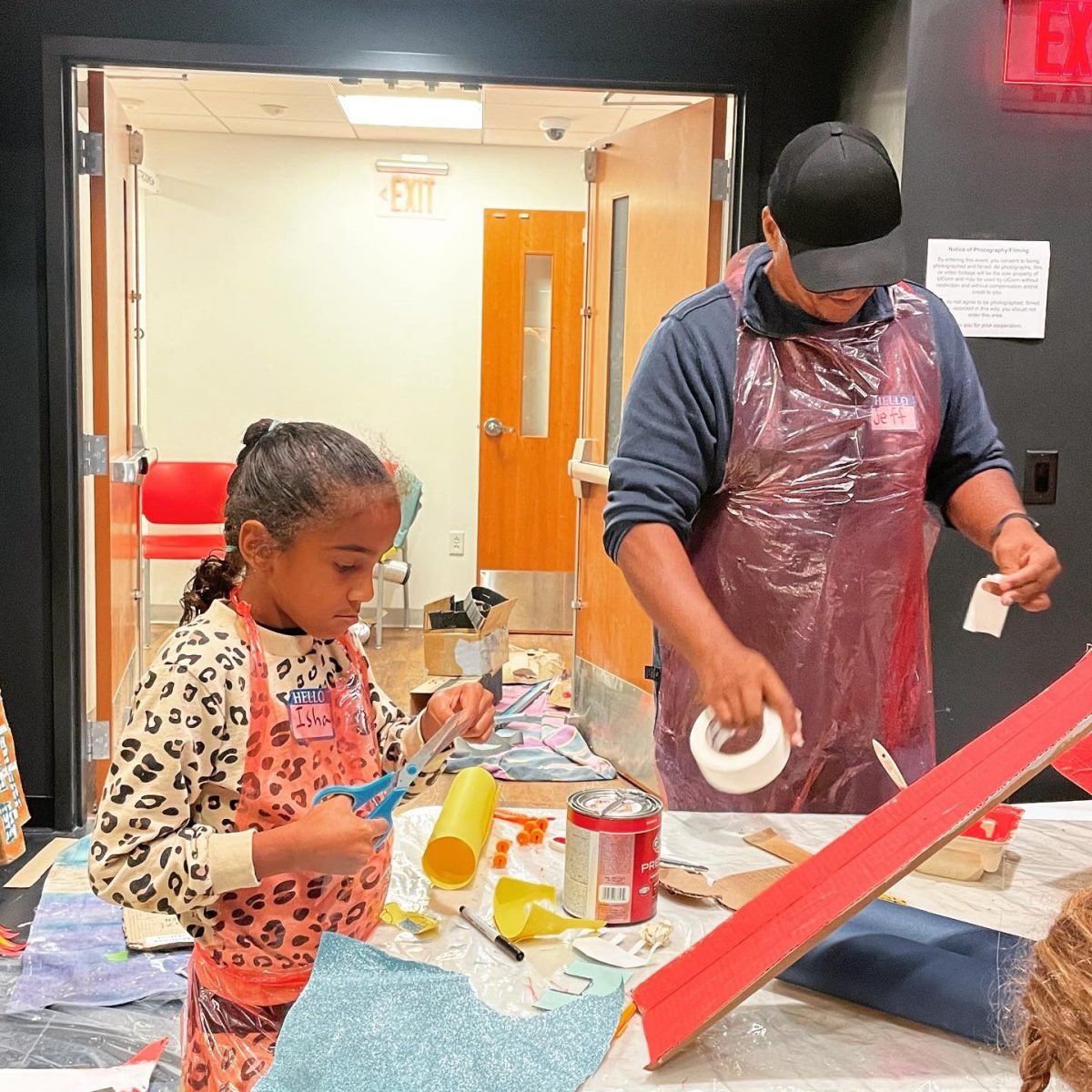
The Ballard Institute is pleased to present a four-day Youth Puppetry Program from June 23–26, 9:30 a.m.–12:30 p.m. for participants ages 9–15.
Over four mornings, participants will work together to create original puppet characters, build a variety of puppets, and develop and perform a short puppet play. Through hands-on activities and creative collaboration, participants will explore the many aspects of bringing puppet theater to life—from storytelling and design to performance and sound.
Skills and techniques explored include:
-Collaborative storytelling and script development
-Design and construction of glove, hand, and rod puppets
-Puppet manipulation and performance techniques
-Creating character voices, sound effects, and foley for puppet theater
-Working as an ensemble to develop and perform an original production
-Whether participants are new to puppetry or already have experience, this program offers a fun and supportive environment to explore creativity, build confidence, and learn from professional puppeteers.
Ballard Institute and Museum of Puppetry’sSpring Puppet Workshop Series
As Storrs quiets down at the end of the semester, things are getting exciting at the Ballard Institute. We are pleased to present two sets of evening workshops – designed for adults. These will be fun, informative, and accessible to beginners and puppet masters alike.
In this class, we will learn to build a hand puppet and experiment with basic methods of hand-puppet performance. We will explore the fascinating hand puppets in our current exhibition: Becoming Modern: U.S. Puppetry in the Twentieth Century.
Instructor: Tom Tuke is a recent graduate of the UConn Puppet Arts Program and has worked with an array of puppets throughout his home New Zealand and, in recent times, New England.
Adults: $60 (4 x 2-hour lessons) | Students (18+ or accompanied by legal guardian): Free
Wednesday, May 13, 7PM-9PM
Session One: Full Steam A-Head!
We will begin with a quick tour of the hand puppets in our latest exhibit, and an introduction to the age-old art of hand puppetry. We will begin to design and build a puppet, starting with sculpting the heads of our characters using clay. This should be a fun, hands-on, and informative introduction to the world of hand puppetry.
By the end of the session, we should begin the papier-mâché process.
Wednesday, May 20, 7PM-9PM
Session Two: Let's get Body-Building!
We will finish the papier-mâché process. Then we will learn a basic pattern and have a hand-sewing session, as we begin to make our puppet bodies.
Wednesday, May 27, 7PM-9PM
Session Three: Dotting the Eyes
We will finish constructing and decorating puppets and begin to play with our hand puppets.
Wednesday, June 3, 7PM-9PM
Session Four: Do We Have a Play on Our Hands?!
In our final session we will develop hand-puppet performance techniques and make short skits with our characters.
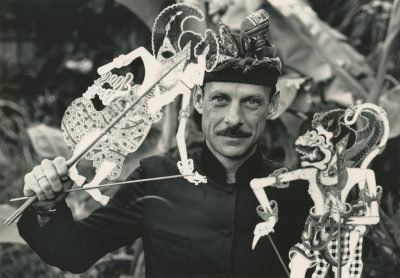
In this class we will learn techniques for building and performing with shadow puppets, inspired by puppets in the Ballard Institute’s collection.
Adults: $45
Students (18+ or accompanied by legal guardian): Free
Instructor: Tom Tuke is a recent graduate of the UConn Puppet Arts Program and has worked with an array of puppets in New Zealand and the US.
Wednesday 10 June, 7-9PM
Session One: Out of the Shadows
We will begin with a short overview of the history and use of shadow puppetry, looking at puppets in the current exhibitions. Then we will head into the workshop. To begin, we will make basic shadow puppets and develop jointed limbs to give our puppets movement.
Wednesday 17 June, 7-9PM
Session Two: Shadow Play
In this session, we will continue with our puppet construction, thinking about stories we could tell. Then, using our freshly built shadow puppets, we will learn how to move our characters on the screen.
Wednesday 24 June, 7-9PM
Session Three: In the Light of It...
In our final session we will be playing with light, refraction, and shadow. Tom will introduce participants to various tricks and methods to develop effect and shift the mood using shadow and lighting.
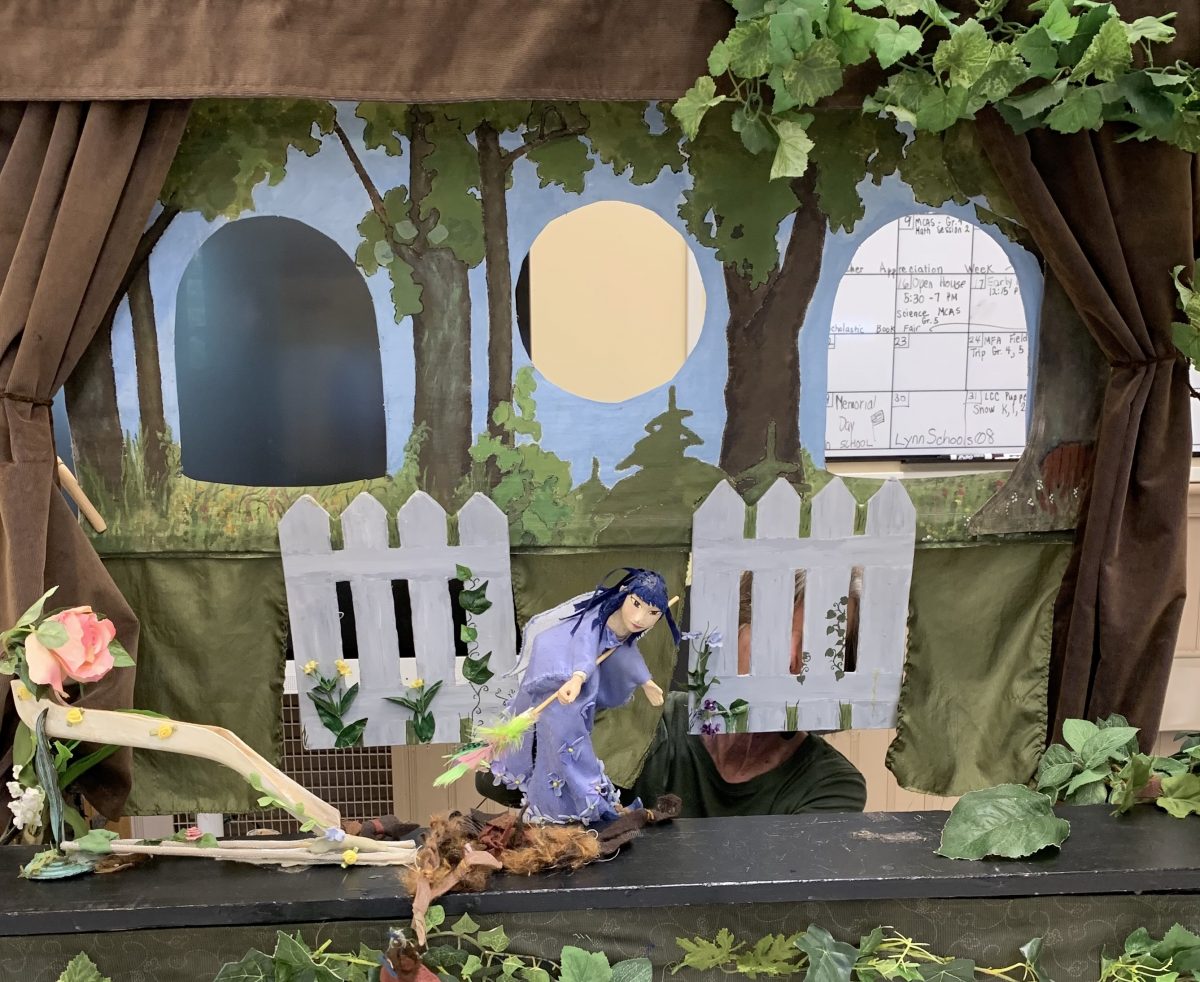
As part of its 2026 Spring Puppet Performance Series, the Ballard Institute and Museum of Puppetry at the University of Connecticut is thrilled to welcome Massachusetts-based Margaret Moody Puppets to perform Badger Meets the Fairies on Saturday, April 18, 2026 at 11 a.m. and 2 p.m. in the in the Ballard Institute Theater, located at 1 Royce Circle in Downtown Storrs.
Join Margaret Moody for an exciting puppet show based on European fairy lore and Margaret Moody’s expertise in Chinese hand-puppet techniques. In Badger Meets the Fairies, Mr. Badger is thrilled to meet Blossom, a flower fairy, in his garden. He flies away with her to help the fairies build a playground. And then it gets complicated: the fairies won’t use cement, and Mr. Badger himself wants to learn to fly. Badger Meets the Fairies is best for ages 4 to 10 and lasts 35-40 minutes. Fairy puppets and sets for their garden were built by visual artist Sandra Pastrana and Margaret Moody. Alison Plante of Berklee School of Music composed original music for the piece, based on Celtic melodies.
Arlington, MA-based puppeteer Margaret Moody works with Bu Dai Xi-style Chinese hand puppets and techniques based on her studies with the I Wan Jan Traditional Hand Puppet Troupe in Taiwan. Margaret performs in libraries, schools, theaters and at private events throughout New England. She also enjoys collaborating with Dream Tale Puppets, led by Jacek Zuzanski and Galapagos Puppets, a New Jersey troupe led by Madeleine Beresford. Margaret lives in Arlington, MA and is a studio artist at Arlington Center for the Arts.
Ticket Prices: Adults: $12; Members/Seniors: $10; Students: $8; Kids: $6 (12 years and under). Tickets can be purchased in advance at the Ballard Institute and Museum of Puppetry, by calling 860-486-8580, or online at ticketleap.events/tickets/bimp-0/badger-fairies. A surcharge will be added to any purchases made online. Tickets may also be purchased at the Ballard Institute on the day of the performance starting at 10 a.m. There will be open seating and no reservations. Visitors can park in the Downtown Storrs Garage located at 33 Royce Circle. For more information about these performances or if you require accommodation to attend this event, please contact Ballard Institute staff at 860-486-8580 or bimp@uconn.edu.
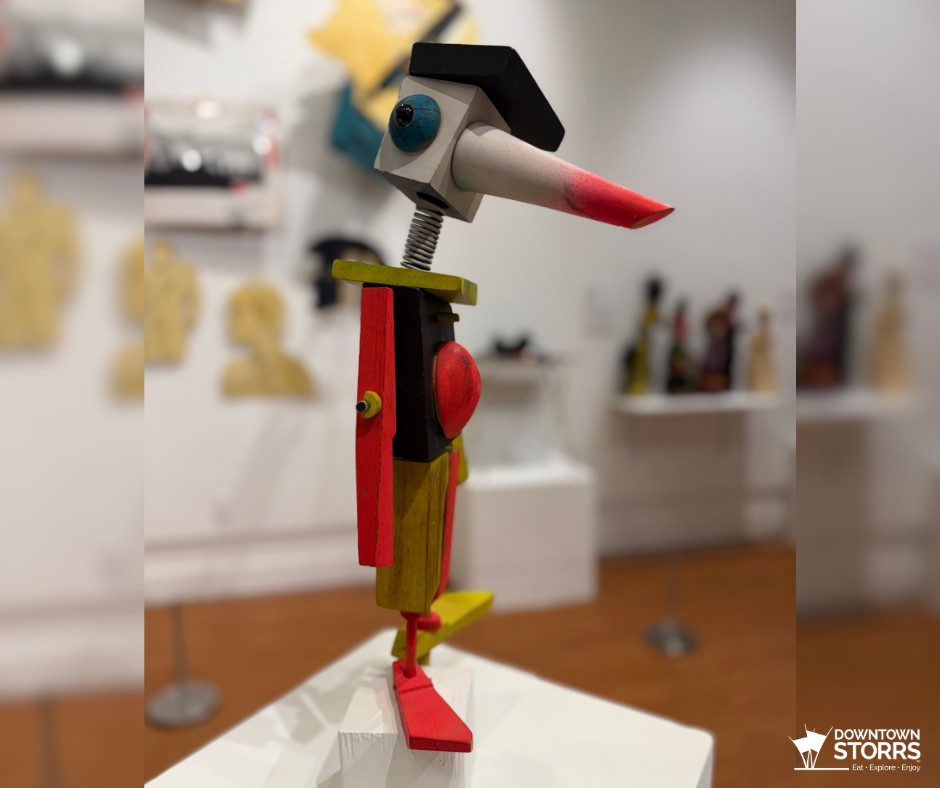
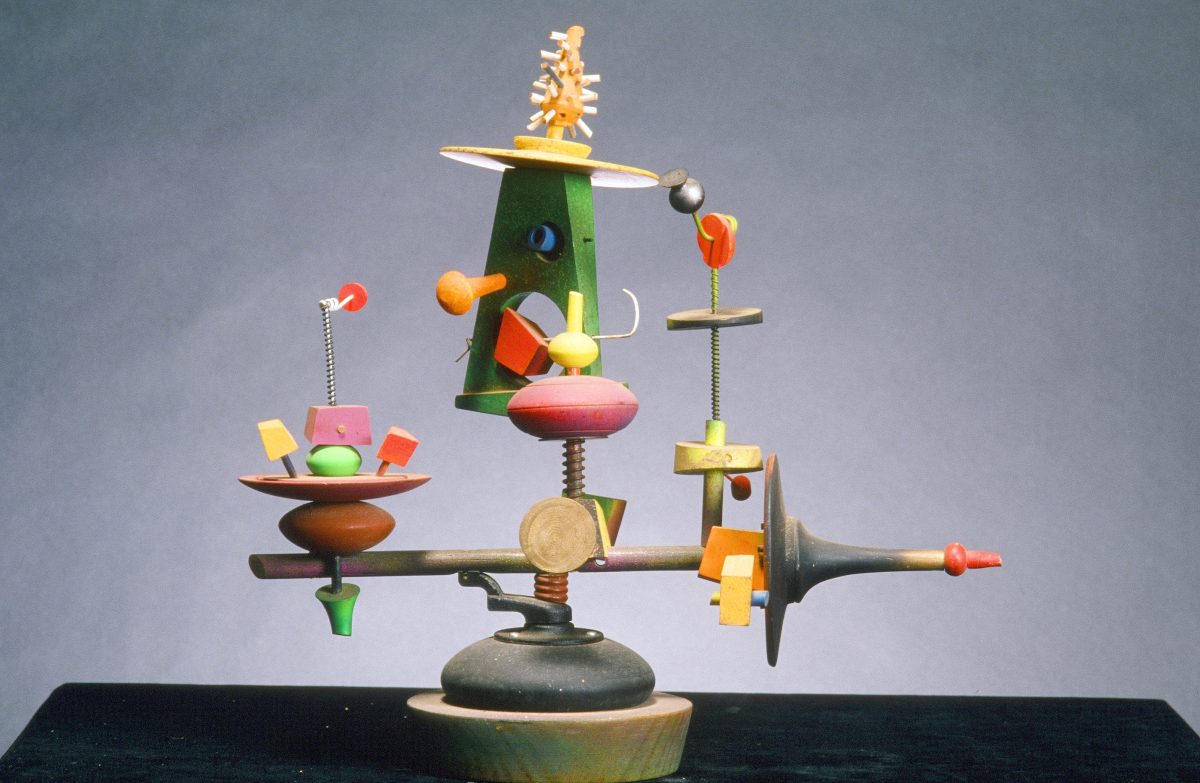
Machine #14 by Basil Milovsoroff. Photo credit: Jack Rowell.
As part of its 2026 Spring Puppet Forum Series the Ballard Institute and Museum of Puppetry at the University of Connecticut is pleased to host “Becoming Modern: U.S. Puppetry in the Twentieth Century,” a discussion with Dr. Claudia Orenstein, Bart Roccoberton, and John Bell on April 22 at 7 p.m. in the Ballard Institute Theater, located at 1 Royce Circle, Storrs, CT. This forum will also be broadcast via Ballard Institute Facebook Live.
This forum will celebrate the Ballard Institute’s new exhibition of the same name, with acclaimed puppet scholar Dr. Claudia Orenstein of the CUNY Graduate Center in New York, UConn Puppet Arts Program Head Bart Roccoberton, and John Bell, Director of the Ballard Institute and Museum of Puppetry. The speakers will explore the ways that puppetry in the United States transformed during the twentieth century from a popular low-culture entertainment to an accepted form of legitimate theater and a massively influential mass-media phenomenon.
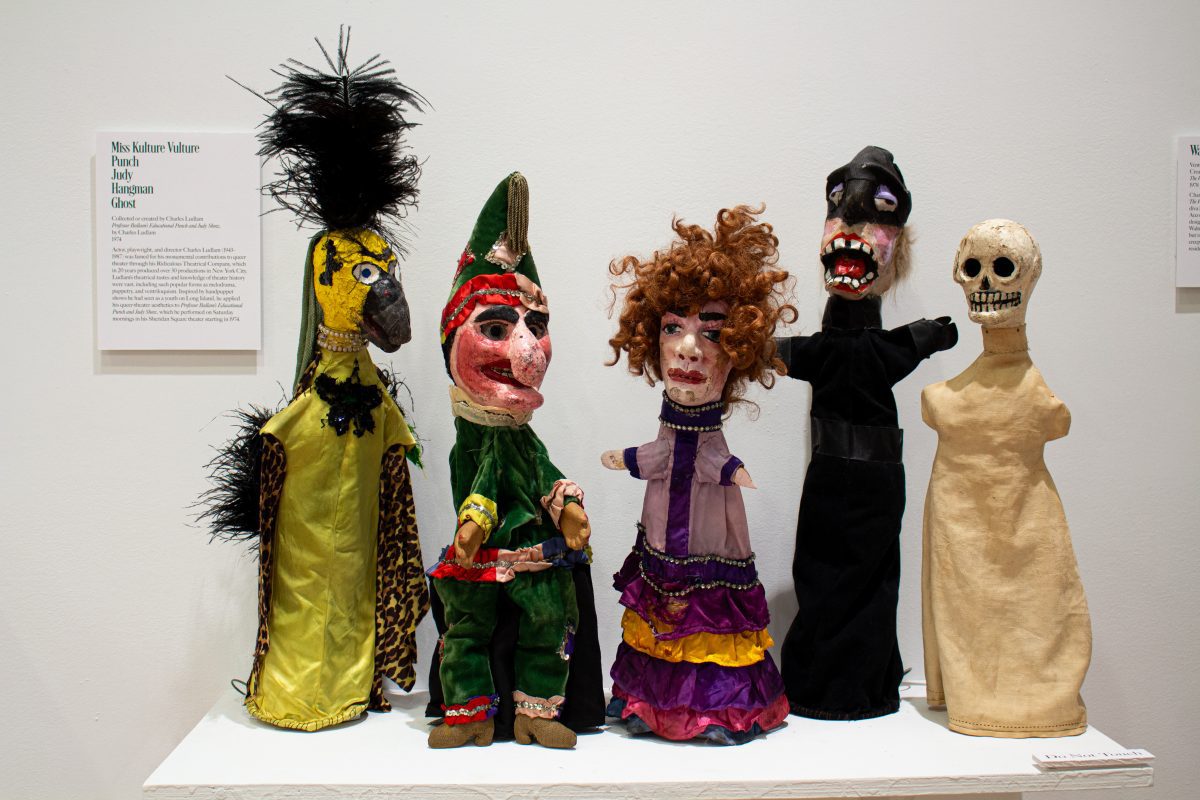
The Becoming Modern exhibition, curated by Professor Bell, includes examples of early 20th-century work by Yiddish puppeteers Zuni Maud and Yosl Cutler, and Russian émigré Basil Milovsoroff; but focuses specifically on innovations in puppetry beginning in the 1960s by such puppeteers as Bob Baker, Robert Anton, Charles Ludlam, Brad Brewer, Dan Hurlin, Stephen Kaplin, Janie Geiser, Larry Reed, Theodora Skipitares, Sandy Spieler, Amy Trompetter, and Charles Ludlam. What made U.S. puppetry “modern,” and how has twentieth-century U.S. puppetry affected what we see today in person and on our screens?
Admission to this event is free (donations greatly appreciated!), and refreshments will be served. For more information or if you require accommodation to attend a forum, please contact Ballard Institute staff at 860.486.8580 or bimp@uconn.edu.
About the Speakers
Claudia Orenstein is an acclaimed scholar of puppetry, performing objects, and material performance, both in regard to contemporary practices globally and to traditional forms in India and Japan. She is the Founding Editor of Puppetry International Research, an online, peer-review, scholarly journal devoted to puppets, masks, and related arts, and author of Reading the Puppet Stage: Reflections on the Dramaturgy of Performing Objects. Dr. Orensteinhas co-edited several scholarly anthologies devoted to puppetry: Puppet and Spirit: Ritual, Religion, and Performing Objects, with Tim Cusack, Women and Puppetry: Critical and Historical Investigations, with Alissa Mello and Cariad Astles, The Routledge Companion to Puppetry and Material Performance, with Dassia Posner and John Bell. She has also worked as dramaturg on Stephen Earnhart’s multimedia production Wind-Up Bird Chronicle and on Tom Lee and kuruma ningyō master Nishikawa Koryū V’s Shank’s Mare.
Bart Roccoberton is Program Head of UConn’s internationally renowned Puppet Arts Program and has been a professional puppet artist for nearly fifty years. He studied puppetry at UConn under Professors Frank Ballard and Albrecht Roser, and has toured popular puppet performances to schools, libraries, colleges, theaters and museums with his troupe The Pandemonium Puppet Company and with the students of The Eugene O’Neill Theater Center’s Institute of Professional Puppetry Arts and The University of Connecticut’s Puppet Arts Program. Bart has created and performed characters for television programs, Broadway productions and special commissions, and conducted workshops for elementary, secondary and college students and teachers across the United States.
John Bell is the director of the Ballard Institute and Museum of Puppetry, teaches at UConn’s Puppet Arts Program, and is a puppeteer and theater historian. He is the author of American Puppet Modernism and other books and articles about puppetry. A member of the Bread and Puppet Theater company from 1976 to 1986, and a founding member of the Great Small Works theater collective in New York City, he is also a founder of the Honk! Festival of Activist Street Bands in Somerville, Massachusetts.
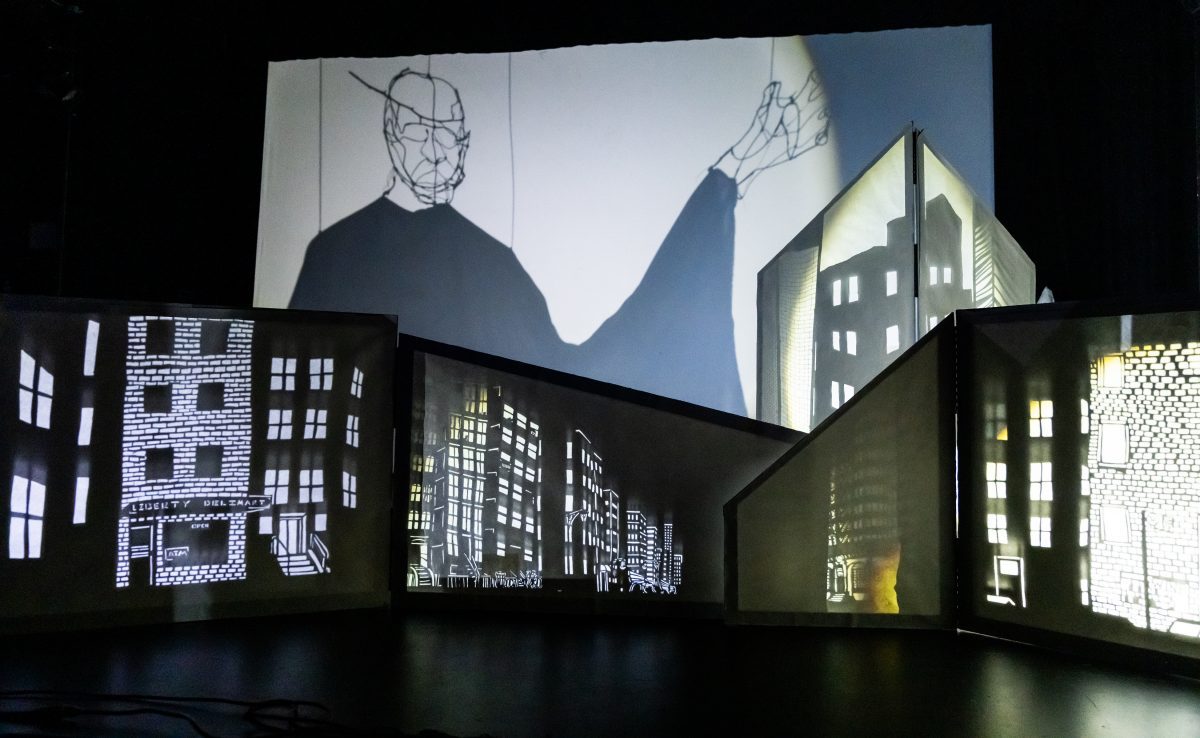
The UConn Puppet Arts Program and Ballard Institute and Museum of Puppetry present B*tch Eat Dog, a puppet-y sketch show exploring girl bosses, tradwives, and the existential abyss, by UConn Puppet Arts MFA candidate Mel Carter on April 3, 4, 10, and 11 at 7 p.m. in the Ballard Institute Theater, located at 1 Royce Circle in Downtown Storrs.
Through grotesque fantasy, irreverent satire, and adaptations of classical texts, B*tch Eat Dog offers a frenetic and pungent interrogation of the gendered ethics of pursuit. B*tch Eat Dog is a puppet-filled sketch show that marries classical texts, feminist theory, and singing dicks. Punch and Judy puppets perform a gender-swapped adaptation of Moby Dick that explores the fallacies of girlboss feminism. A tradwife named Felicity Groundwater hawks her questionable raw milk wares and ultimately breastfeeds a member of the audience with one of her nine pendulous burlap boobs. A new kind of IUD insertion escalates until rats are being shoved down a woman’s cervix. The evening is hosted by a hapless, well-intentioned white man who flails wildly as his misguided attempts at allyship lead to a painful realization. The show runs for 90 minutes, with a question-and-answer session to follow. Content warning: violence, sexual content, sexual assault, puppet nudity. Recommended for ages 17+.
Tickets are free but seating is limited, so reservations are required: https://events.ticketleap.com/tickets/bimp-0/b-tch-eat-dog. Visitors can park in the Downtown Storrs Garage located at 33 Royce Circle. For more information about these performances or if you require accommodation to attend this event, please contact Ballard Institute staff at 860-486-8580 or bimp@uconn.edu.
About Mel Carter
Mel Carter began her professional career in Washington, D.C., where she was a resident artist with the 4615 Theatre Company. While there, she performed with Imagination Stage, Spooky Action Theatre, and Pointless Theatre Co, among others. while simultaneously creating visual art. Her work has been featured in multiple publications, including the Washington Post. Mel has been awarded an Arts and Humanities Fellowship and a Color the Curb grant by the D.C. Commission on the Arts and Humanities. Since discovering puppetry, she has built and/or performed puppets with Pilobolus Dance Theater, Bread and Puppet Theater, Mosaic Theatre, Paloma Puppet Theatre, and the OddFellows Playhouse, among others. Mel is currently a graduate student at the University of Connecticut where she is on track to receive her MFA in Puppet Arts.
Machine #14 by Basil Milovsoroff. Photo credit: Jack Rowell.
The Ballard Institute and Museum of Puppetry at the University of Connecticut will present the grand opening of its new exhibition Becoming Modern: U.S. Puppetry in theTwentieth Century on Thursday, March 26 with refreshments served at 5 p.m., and a free tour at 5:30 p.m. The tour will also be streamed on Ballard Institute’s Facebook Live. All events will take place at the Ballard Institute, located at 1 Royce Circle in Downtown Storrs.
U.S. puppetry in the early twentieth century reflected popular European traditions—as well as African American and some Asian forms—but also saw the emergence of innovations based on the idea of puppetry as a modern performance form. U.S. puppeteers in the 1940s and 50s saw that puppetry was still considered a low-culture entertainment form for children but began to develop new forms and contexts for puppetry to be understood as a modern art form for all audiences in theater, film, and television. This exhibition focuses on puppet innovations in live performance, a variety of forms on varying stages, and multiple different influences.
Becoming Modern: U.S. Puppetry in the Twentieth Century, curated by Ballard Institute Director John Bell, includes work by puppeteers Basil Milovsoroff, Larry Reed, Sandy Spieler, Dan Hurlin, Janie Geiser, Peter Schumann, Theodora Skipitares, Eric Bass, Sidney Chrysler, Amy Trompetter, Brad Brewer, Zuni Maud, Robert Anton, Nicola Seraphine, Charles Ludlam, Bob Baker, and Stephen Kaplin.
The museum will be closed through March 26while the new exhibition is installed. After the opening, the Ballard Institute will be open Wednesday through Friday from 11 a.m. to 5 p.m. and Saturday and Sunday from 11 a.m. to 7 p.m. There is no set admission, but visitors are encouraged to pay as they wish. Learn more at bimp.uconn.edu.
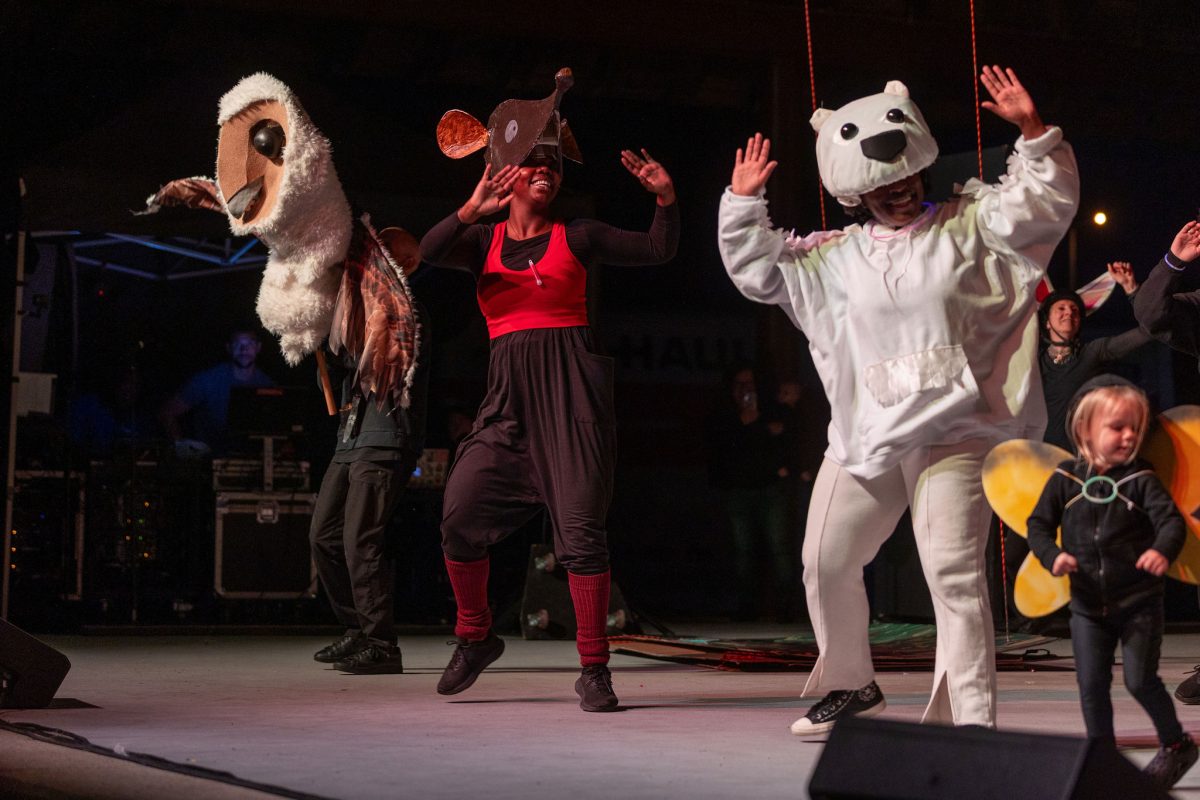
The Ballard Institute will be closed March 9 through March 26 as we install our new exhibition. Join us on March 26 at 5p.m. for the grand opening of Becoming Modern: U.S. Puppetry in the Twentieth Century.
Due to the impending weather for Friday, 2/20, we are reschedulingCalle Allendeby Pinned & Sewtured for Saturday, 3/7 at 7 p.m. If you already purchased a ticket, it has automatically been transferred to that date, but if you prefer a refund, please email emily.wicks@uconn.edu. Tickets are still available for 3/7 here: https://events.ticketleap.com/tickets/bimp-0/calle-allende
[caption: UConn Puppet Arts alumni Joe Therrien (left) and Mackenzie Doss (right) will perform at the 2026 UConn Winter Puppet Slam.]
The Ballard Institute and Museum of Puppetry and the UConn Puppet Arts Program will present the 2026 UConn Winter Puppet Slam on Friday, March 6, 2026 at 8 p.m. in UConn’s Harriet S. Jorgensen Theatre, on the lower level of the Jorgensen Performing Arts Center at 2132 Hillside Road, Storrs, CT 06269. The UConn Winter Puppet Slam will feature new and experimental short works by professional puppeteers and performers, including Puppet Arts alumni Joe Therrien and Mackenzie Doss, as well as new works by UConn Puppet Arts students. Mansfield’s Waldron’s Studios 88 will return once more as the Puppet Slam house band.
The 2026 UConn Winter Puppet Slam welcomes back UConn Puppet Arts alumni Joe Therrien and Mackenzie Doss. Brooklyn-based Joseph Therrien, from Boxcutter Collective, will perform Inside the Palace of Your Mind, which will transport the audience from the Here-And-Now to the upper reaches of the human mind, using hand puppetry, music, and whatever the audience has in their pocket. Vermont-based puppeteer Mackenzie Doss will perform Transcendence, which explores transformation as a universal process governed by chance and the things we are willing to let go, and how entering a state of transformation includes finding that anything is possible. The UConn Winter Puppet Slam also features new works by graduate and undergraduate students from the UConn Puppet Arts Program, and music by Mansfield’s Waldron’s Studio 88 band, led by Derek Waldron. Funding for the Slam is made possible, in part, by the Puppet Slam Network. These performances are recommended for mature audiences.
The UConn Winter Puppet Slam is free and open to the public; donations are greatly appreciated. Seating is on a first-come, first-served basis. Doors open at 7:30 p.m. The event will take place in UConn’s Harriet S. Jorgensen Theatre, located at 2132 Hillside Road, Storrs, Conn. 06269, on the lower level (use rear entrance). For directions to the Harriet S. Jorgensen Theatre, visit crt.uconn.edu. For more information about these performances, or if you require accommodation to attend this event, please contact Ballard Institute staff at 860-486-8580 or bimp@uconn.edu.